A terror state
of siege
Mansor Pooyan
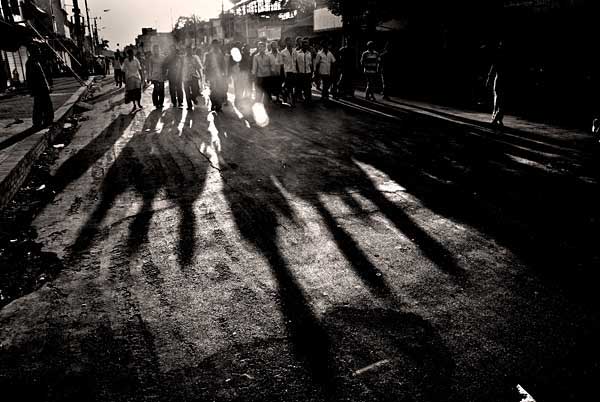
© Munem Wasif
A terror state of siege
Poet : Ali Abdolrezaei
Translator : Abol Froushan
Critic : Mansor Pooyan
Auditor : Dr Helen Pearce
Before advancing my critique of the poem Terror, I would advise the
reader to read the poem itself first. This allows a comprehensive point
of reference to be maintained against multi-dimensional remarks I make
throughout the assessment. So let's read the poem Terror here first:
From far
away you bury your father
wipe your mother's
tears from far away
in a café where
you can ambush loneliness
you chat with a
weeping house
video call from
afar
Mother
three steps above everything like a moon is up there
kissing Mahsa (moonface)
goes after Mahtab
(moonlight)
and yet her
demeanour which carries a headache
is the execution
of my placeholder
in the the arms of
a few women
In a banned house
they're all coming
like I have left
I'm in
deep sorrow
this sorrow of my
words
in Langrude
at the foot of a
bridge that's more a stallion than running
they killed my father
they killed my
father
but
only in Langrude
otherwise each
year someone's
leaving, breaking away
Friday is a bleak
house that was massacred
and the family,
the Iran which was executed at home
since we chanced
out of the loins of Eve
and Adam became
man's exclusive pa
we put Jesus in
the Church
so the hero so
hidden in women's loins
would
manifest instantly
to send death
that's
ahead of the horse
far from the house
At the foot of the
bridge that so lacks a father
as
Jesus son of Mary
I was so walking
in myself
as to
put my town to shame
Not so shamelessly
as Juda
to unleash wolves
to kill the father
I should keep
quiet
so the
rabid dog won't wake
and bark and bark
in the house
and the blood
letter lurking in female loins
won't get the
chance
to cut
a wound in the morning
now that the horse
is the principle
and death
the bailiff
with the sorry
state of my eyes
that make a small
sea for the frog to swim
what do I do if I
don't risk
no longer will few
extra throats harbour such a lump that makes a necklace to my throat
death
is sat
squatting in my sorrow
the knife can no
longer help my life
the bottle is so
full
that
any longer has no wine
and the wound that
has a depth of ruin
is so effective
that blood is
random walking through my drunken veins
the one who was
my pa
the big baba
the friend on
road
the one seen
jamming with me
I was left
alone
Am alone
by
my J's
am alone
by
my J's
more alone
by
my J's
more than ever
This alley is more
for the job than a knife
this
house from the arm
this pain
will
last another man
this man
will
rise in another place
the road's father
is from either side
and death
that is life's destination
is the services café along the way
It has a lantern
but
it's dark
has bitter tea
in narrow waisted cup
but sweet
like a lament
spilling off the call of lovers
A Ashura band
of chest-beaters this side of the way
singing
oh my Hosein oh my Hosein
A band of chest
beaters that side of the alley
Oh my standard
bearer's stature where art thou?
Like a nation
bequeathed of Imam Hosein
a home
town is left behind
from a little
house
at the end of a
road
in a remote place
left behind
A nation that put
to fire its country like a match
slayed the
bedstead
and morphed the
spouse to a sea
Long live the wind
that was but late
Long live the
desert that has no sea
and mother
mother
a mother who
can no longer
pin
her lips onto my cheeks
The road has a
journey on either side
and me
a half torn hyman a half torn hymn of Sohrab on the wedding
night
I haven't shed the
father's blood to come true
I'm whiling
death's remit
like a shoe with
laces untied
I'm such a lout
that could for the
killer
who has a stocky
stature
turn my thumb to a
spade
you say Ouch!
And be careful
god is great
hallelujah
father is not
dead hallelujah
and love
like a recipe with
water's flesh against the mince with the face of a cow
is all ready
Mary is not anti
magdalin
Leila is not anti
love
and La Elaha Ella
Love
is a
hailing
that has a son from tomorrow’s
the alley in each
house is the father
and for pa
a
nurse
that
is privately
and a rice
paddy which can't be sold without my signature
I am heir to your
wound father
what have I to do
with your garden
give your assets
to your brother
and your son in
law who sleeps with the most sisterly god
enjoying his time
I'm like a brigade
who's lost a country
my base is lost,
no longer to be found
I'm gone like a
sunrise after sunset mother
at least sweep the
clouds off the mountain of Karbala
plow the snow
weighing down on my roof
don't cry
just your being
there for me to look into your eyes
is still more than
enough
the fact that you
kept saying God is Great aloud as I misbehaved while you were
praying and now that God is Great keeps bugging your life
God is Great
Cradled in the
sunset going down the slope of Thursday
Halva again
why don't you
donate the dates again?
Oh my lord
The half finished
painting of my wedding night
and I'm such a
lout
that cannot help
being a fathered child
I've even forced
my Sunday to go to church
to sit next to
Marge somewhere along the isle
and constantly
to wink at Mahsa
who is a female Jesus
I'm no longer the
person that I was
I have no time
and when ever I
have no time is the (right) time
I am no longer a
man who is no longer like Adam
if you are
just say Ouch!
*******
As this poem is a fairly long one, it would seem logical to start with
the whole of the opening stanza looking for clues of a central
opposition, which should help to come to grips with the main subject
matter of the poem.
In the first stanza of The Terror, Ali Abdolrezaei describes how he
feels and then goes on to mention the loss of his father. A sense of
pain is set against his absenteeism to tackle family issues back home.
Thus a bewildering sense of space via a dichotomy of here and there is
created. This idea of a distant place is important to Ali. This poem is
filled with glimpses, with echoes of large areas of experience
tantalizingly out of reach.
Terror’s approach is strong in its evocations of the fragility of life,
exploring birth, death and memories.
In this regard poetry is used as a way of ordering and understanding
traumatic experiences. Can readers really engage with poetry which is
deeply rooted in the personal? Can this kind of poetry have lasting
value or will it be too connected to particular incidents and historical
frameworks?
War poetry provides counter argument to this debate in the sense that
experiences of post traumatic stress disorder (PTSD) might have
incredible resonance for readers who were not alive or having had
witnessed the socio-historical conflicts of the same nature.
From far away
you bury your father
wipe your mother's tears from far away
The first stanza signals to us that the poet is leaving behind the world
he is alienated from. An auto-biographical account is presented here as
a heart-rending account of his life in exile.
in a café where you can ambush loneliness
you chat with a weeping house
video call from afar
Oddly the poem inadvertently draws attention to the sort of things that
really are happening in today's Iran. The poem sheds light on a state of
siege governed by a form of terror controlling private and public life
in Iran. The poem endeavors to demonstrate the general feeling of
insecurity at all levels of society under Islamic Holy terror.
A nation that put to fire its country like a
match
slayed the bedstead
and morphed the spouse to a sea
Long live the wind that was but late
Long live the desert that has no sea
Here an unrelenting sequence of painful images is conveyed. The harsh
realities of a society where pain, suffering and death exist are
depicted through terrorising imagery. Painful reminiscences of the past
keep drifting back in.
at the foot of a bridge that's more a stallion
than running
they killed my father
they killed my father
but
only in Langrude
otherwise each year someone's
leaving, breaking away
Friday is a bleak house that was massacred
and the family, the Iran which was executed at home
Terror is a poem that reflects
nihilistic views as well as conspiratorial outlooks. Begun in the wake
of a family tragedy, the poem is imbued with the disillusionment of
Iranian intelligentsia with the Revolution of 1979. No solution is
provided as the poem ends in confusion. Ali seems to provide a kind of
epigrammatic solution to thematic issues in the poem.
I'm no
longer the person that I was
I have no time
and when ever I have no time is the right time
I am no longer a man who is no longer like Adam
if you are
just say Ouch!
Ali sets up a tension in the poem and develops his themes in
consistently sensory images that are not fully resolved. He appears to
be saying that we cannot resolve the misery or turning our backs on
death and decay.
In the next episode, the protagonist makes confession that he is ashamed
of pessimism and drunkenness to secure his futilitarianism.
death
is sat squatting in my sorrow
the knife can no longer help my life
the bottle is so full
that any longer has no wine
and the wound that has a depth of ruin
is so effective
that blood is random walking through my drunken veins
This poem appalls us with visions of horror as the entire picture is so
negative and depressing. The vision presented is of a world where values
and standards have gone, where what is destroyed is a sense of humanity.
now that the horse is the principle
and death the bailiff
with the sorry state of my eyes
that make a small sea for the frog to swim
what do I do if I don't risk
no longer will few extra throats harbour such a lump that makes a
necklace to my throat
In the above, "horse" symbolizes a vessel by which one can escape the
homeland whereby "death" is the bailiff who is knocking at doors to
confiscate livelihood. He illustrates the scenes of either fear of death
or state of misery.
Terror Ali's fascinating poem is divided into three varied sections and
the poem is strong enough to hold all flesh put on the bones and façades
of its structure. There are parts about his childhood, moving pieces
about his parents and about his own experience of the mother.
Mother three steps above everything like a
moon is up there
kissing Mahsa (moonface)
goes after Mahtab (moonlight)
and yet her demeanour which carries a headache
is the execution of my placeholder
in the arms of a few women
In the first section, the protagonist bemoans the seemingly impossible
attempt to write accurately about his family life back in Iran. The
mother, like a moon, is independently and passionately looking after his
two sisters (Mahsa and Mahtab: two poetic metaphors in classical Persian
literature) and despite suffering headache, keeps him in the company of
her friends in spare time.
He smoothly slides away from childhood tempting to switch to his loss of
identity in adulthood when he decides to leave his hometown (Langrude)
in Iran.
In a banned house
they're all coming
like I have left
I'm in deep sorrow
this sorrow of my words
in Langrude
The second section takes a more
autobiographical approach to social conflict and the split between
people and the regime in Iran. But a continuation of a sequence from his
earlier exploration of personal fragility provides a linking thread.
This childlike quality of past reminiscences is sustained throughout the
poem.
and mother
mother
a mother who can no longer
pin her lips onto my cheeks
Although the poem begins with the memories of family life, it quickly
moves on to bring about social disintegration problems in post
Revolutionary Iran.
However, once Ali has drawn the reader in, darker implications begin to
take over.
At the foot of the bridge that so lacks a
father
as Jesus son of Mary
I was so walking in myself
as to put my town to shame
Not so shamelessly as Juda
to unleash wolves to kill the father
I should keep quiet
so the rabid dog won't wake
and bark and bark in the house
and the blood letter lurking in female loins
won't get the chance
to cut a wound in the morning
At this point of the lengthy monologue, the protagonist is justifying
his low-key profile to avoid confrontations with unscrupulous figures
who will stop at nothing to advance their egoistic gains. He suspects
the death of his father at the foot of the bridge in Langrude was part
of a greater conspiracy like in Judah’s story.
The narrator assumes it is wise enough to keep quiet in order to defuse
the aggression of "the rabid dog" in his hometown from committing
further atrocities. They trawl the population for soft prey and at the
same time boasting about their religiosity.
One of the most remarkable aspects of the poem is the sense of humour
with which the poet tackles his problems, addressing major issues such
as Islamic paternalism, loss of identity and isolation.
like a shoe with laces untied
I'm such a lout
that could for the killer
who has a stocky stature
turn my thumb to a spade
you say Ouch!
And be careful
god is great hallelujah
father is not dead hallelujah
and love
like a recipe with water's flesh against the mince with the face of
a cow is all ready
In the third section, religious/ mythical allusions are used to portray
a sense of self-estrangement. One needs to be aware that the three
sections, though tapped into very fertile ground, are intertwined and
fragments of each section are repeatedly scattered throughout the poem.
At points such as the above, the idea of a religious tribute seems
almost a mockery. The poem alludes to religious folktales as if the
situation is so unprecedented that the old forms can’t cope with it.
Mary is not anti Magdalin
Leila is not anti love
and La Elaha Ella Love
is a hailing
that has a son from tomorrow’s
It is an allegorical poem: telling one story while seeming to tell
another. Satirical at times, but prominently based on a strong
allegorical structure. Here the imagination dwells upon the Creation
myth to infer the conflicting human characteristics. The images and
stories in this poem provide an opportunity to discover more about Iran.
since we chanced out of the loins of Eve
and Adam became man's exclusive pa
we put Jesus in the Church
so the hero so hidden in women's loins
would manifest instantly
to send death
that's ahead of the horse
far from the house
The narrator here attempts a Christian-devotee stance, but shows another
way of looking at oneself. Here he plays the role of Christian to an
imaginary congregation. Distancing himself from a violent venture, he
seems to zoom into sensations and difficulties, so that surreal aspects
of relationships emerge as well as a humour which might have been
blurred in a head-on approach.
I've even forced my Sunday to go to church
to sit next to Marge somewhere along the isle
and constantly
to wink at Mahsa who is a female Jesus
Through a soliloquy, the problems facing the narrator are expressed. The
entire poem is a soliloquy in which the poet speaks his thoughts out
loud. Imagery is laced with continual references to beasts of prey and
hypocrisy even within the family.
the alley in each house is the father
and for pa
a nurse
that is privately
and a rice paddy which can't be sold without my signature
I am heir to your wound father
what have I to do with your garden
give your assets to your brother
and your son in law who sleeps with the most sisterly god
enjoying his time
The sequence humorously points up how we are doomed to harbor mistaken
assumptions even about those closest to us. One way or another, Terror
sits down with us at the kitchen table wherever we are.
Probably the most personal affectionate sequence is the part that adopts
the voice of a humble son speaking about his mother.
I'm like a brigade who's lost a country
my base is lost, no longer to be found
I'm gone like a sunrise after sunset mother
at least sweep the clouds off the mountain of Karbala
plow the snow weighing down on my roof
don't cry
just your being there for me to look into your eyes
is still more than enough
the fact that you kept saying God is Great aloud as I misbehaved
while you were praying and now that God is Great keeps bugging your
life
God is Great!
The poem consists of a series of personal/ historical stories that
delight in their own quiet inventiveness and deftness of touch and at
the same time they conjure darker, even apocalyptic, perspectives.
Karbala is a holy city for Shiite pilgrimage. People go there to mourn
and pay tribute to Imam Hosein.
This alley is more for the job than a knife
this house from the arm
this pain
will last another man
this man
will rise in another place
the road's father is from either side
and death that is life's destination
is the services café along the way
It has a lantern
but it's dark
has bitter tea in narrow waisted cup
but sweet
like a lament spilling off the call of lovers
This poem has a story line and a second hidden meaning. It is about
haunting memories of family life in a world where death exists
everywhere. Although it is redolent with ambiguity, the poem succeeds in
many different levels of meaning-personal, social and societal.
The road has a journey on either side
and me a half torn hyman a half torn hymn of Sohrab on the wedding
night
I haven't shed the father's blood to come true
I'm whiling death's remit
Many striking effects come from conscious or unconscious double
meanings. One may encounter an ambiguous passage where there is no clear
meaning, and come across an ironical part where several exist. The
anachronism of the Iranian socio-political context at the moment would
inevitably lead to a sudden and unintentional descent of ludicrous and
ridiculous (bathos).
The protagonist makes reference to Sohrab (a tragedy character in
Persian classical literature) as an analogy to imply his own
predicament.
A Ashura band of chest-beaters this side of
the way
singing oh my Hosein oh my Hosein
A band of chest beaters that side of the alley
Oh my standard bearer's stature where art thou…
Here the poet is reflecting the anachronistic nature of the Iranian
thinking patterns. Thus one ubiquitous claim amongst the politically
dominant class is that human rationality alone is not enough to rely on
in solving pressing personal/ social problems.
In the above assertion, a third person appears to remind the reader of
this religious zealotry. The religious factional in-fighting has drawn
even brothers into different set of ideological values simply because of
their religious affiliations.
Hosein was a prominent religious figure in seventh century Islam, who
lived under the most difficult outward conditions of suppression and
persecution. He was eventually martyred in the battle of Karbala on the
day called Ashura since.
The emergence of a third voice in the stanza above is belittling towards
the factional divisions of the Shiite in commemoration of their Imam
Hosein.
Like a nation bequeathed of Imam Hosein
a home town is left behind
from a little house
at the end of a road
in a remote place left behind
Etymology of Ashura then means Commemoration for Hosein after Battle of
Karbala. Commemoration of Ashura has great socio-political value for the
Shi'a. There are ceremonial dramatizations designed for popular
consumption aiming to arouse pity and passion for Hosein.
Nevertheless, the protagonist resembles himself and his homeland with
Hosein and Karbala. Reminiscences may become a framework for his
marginal and dissenting status.
The re-emergence of the third voice in the stanza below is soothing this
time round as a folkloric song is re-cited.
This interventionist folk motif that finds its place in this poem on a
transitory basis contrasts with the narrative's engagement with a
surreal or fantastical world of fractured identity depicted in
paradoxical sequences.
Another area in which this folk voice intervenes is when a melancholic
folkloric song emerges between two schizophrenic presumptuous sequences.
the one who was my pa
the big baba
the friend on road
the one seen
jamming with me
I was left alone
Am alone
by my J's
am alone
by my J's
more alone
by my J's
more than ever
Behind the conjured larger themes and landscapes we encounter a
melancholic narrator who broods upon the sadness of life.
Cradled in the sunset going down the slope of Thursday
Halva again
why don't you donate the dates again?
Oh my lord
The half finished painting of my wedding night
and I'm such a lout
that cannot help being a fathered child
What's more, the poem goes on to articulate what for Abdolrezaei is
probably a guiding aesthetic:
"whenever I have no time is the (right) time/I am
no longer a man who is no longer like Adam!/if you are?/just say Ouch!"
The end of "Terror" quietly offers something to hold on to: some glimpse
of an answer in his alertness to a predicament/state of mind with an
ongoing willingness to reassess.
*******
The epithet “Persian modern poetry” refers to poetry that was written as
long ago as the Constitution Revolution in Iran (1905), but in general
the usage of the term usually implies literature since the 1950s.
Suspended between a half-forgotten traditionalism and an oppressive
modernism, the occurrence of the Iranian Revolution initially won the
heart and mind of the intelligentsia.
Following the establishment of the Islamic Republic in 1979, the
devastating eight-year war with Iraq, where thousands of teenagers ran
for martyrdom, scarred the psyches of the younger generation for years
to come.
In today's Iran the right to freedom of expression is curtailed; thus
poets cannot engage directly with those political issues. Further,
general disillusionment with politics means political poetry is now
largely unfashionable in Iran. Having said that, Poetry is the still
small voice of opposition which avoids attacking the abusing power head
on, nevertheless shows it to be the crude bully boy that it is. In
current circumstances, Iranian poets can't write without any resonance
to politics as if they could shut the window and get on with their work.
It’s something you can't choose to forget about.
Ali Abdolrezaei does not engage directly with politics but at the same
time he cannot afford to ignore them.
Terror is a varied collection of themes with echoes across its different
parts, all equally vital to the whole.
This poem is a continuation of a sequence from his earlier poems. Terror
is concerned not only with divisions between public and private life but
also with the interplay between inner and outer worlds, imagination and
reality, physical and spiritual. Terror is a dark, unified poem moving
towards regeneration.
What links the poems more than anything is this overriding sense of not
belonging, of fragility, even in our relationship with the self. What
starts as a self addressing piece ("From far away / you bury your father
/ wipe your mother's tears / from far away") quickly shifts into a poem
about the speaker's own elusive hold on the past:
Friday is a bleak house that was massacred
and the family, the Iran which was executed at home
The poem's final section adopts the voice of a pragmatist as he speaks
about the subtleties and complexities of his fortunes. The poem is
delicately surreal, exploring the fragility of life and uncertainty.
Throughout, the poem draws on fantasies transforming the familiar into
strange evocations of tensions of intimacy, frustration and paranoia.
This poem is a good example of his ability to compose with surreal
agility, glimmering with shadows and more ominous implications.
Abdolrezaei's rich imagery and luxuriant imagination recalls the
transformations of Chagall paintings and the dream-visions of Salvador
Dali.
Ali's poetry is distinctively illustrative of post 1979 Persian
literature. This phase in particular includes a tendency to protest
against social idealism, very characteristic of the previous literary
modernism. Post-Revolutionary Persian literature promises a new dawn –
much like that outburst of art, literature and philosophy in Europe
following World War II.
March 2009
بازگشت |
